What Facility Managers Should Know About Indoor Air Quality Before Heating Season
What Should Facility Managers Check Before Heating Season?
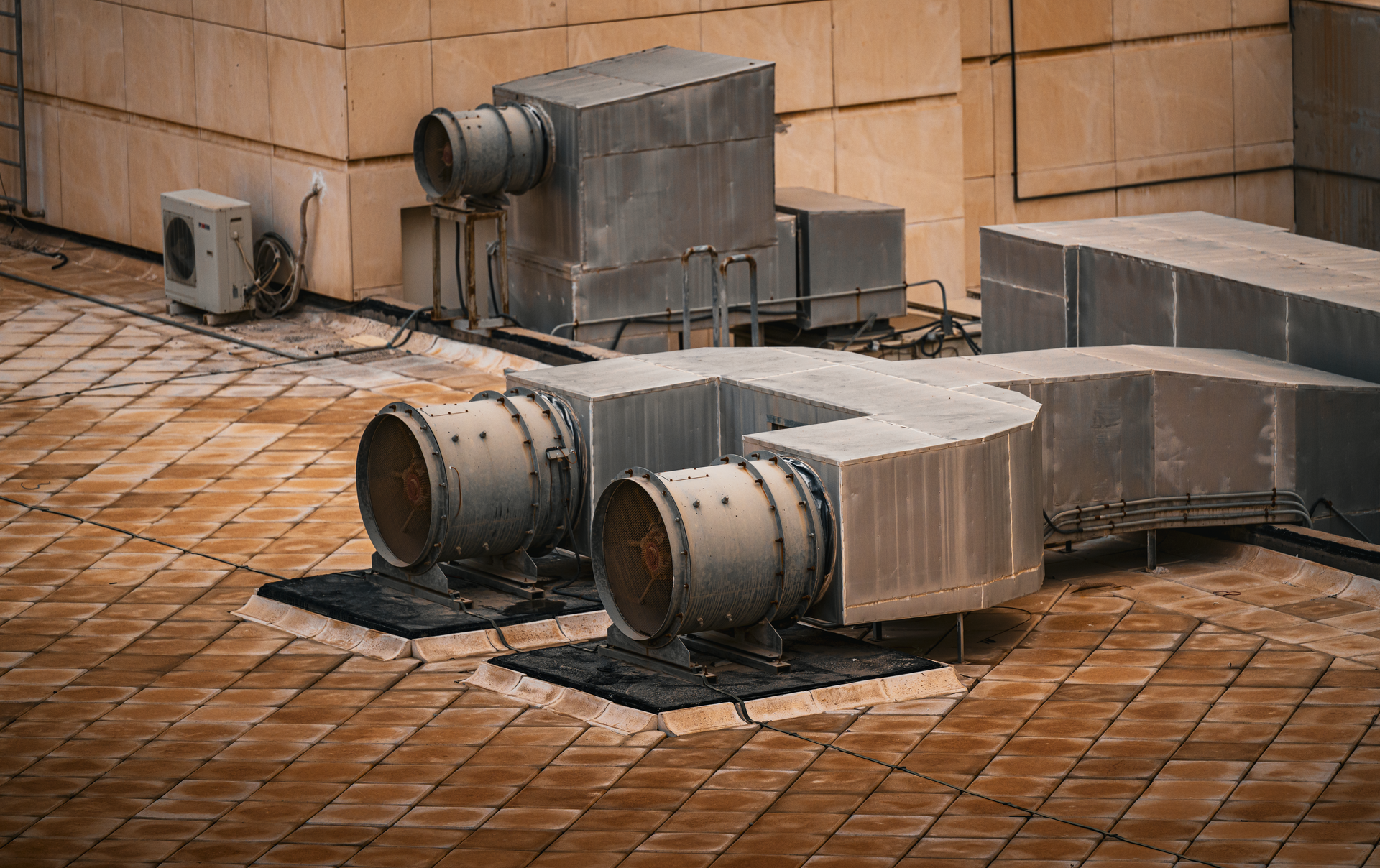
As summer transitions into fall, facility managers begin preparing boilers, furnaces, air-handling units, and ventilation systems for colder weather. This seasonal transition is also an ideal time to evaluate indoor air quality.
Heating systems do not automatically cause indoor air quality problems. However, once windows remain closed and buildings rely more heavily on mechanical ventilation, existing issues may become more noticeable. Inadequate outdoor air, poorly fitted filters, moisture, dust, temperature differences, and indoor contaminant sources can all affect occupant comfort and building performance.
What should facility managers do before heating season?
Inspect HVAC and combustion systems, verify that filters and outdoor-air components are functioning properly, look for leaks and damp materials, review occupant complaint patterns, and perform targeted indoor air quality measurements when conditions warrant. Correcting the source of a problem is more effective than relying on air testing alone.
Why Should HVAC Systems Be Inspected Before Heating Season?
HVAC systems play a central role in indoor air quality because they help provide outdoor air, filter particles, distribute conditioned air, manage temperature and humidity, and remove air from designated spaces. A system may still produce heat while delivering insufficient outdoor air or distributing air unevenly.
A pre-heating-season inspection gives the facility team time to address maintenance problems before the equipment is needed continuously. EPA guidance identifies adequate ventilation, filtration, moisture management, and thermal comfort as core HVAC functions that support indoor air quality.
The inspection should evaluate:
- Air filters and filter racks: Confirm that filters are the correct size, installed in the proper direction, and seated securely so air cannot bypass them. Use a filtration level compatible with the system’s airflow and fan capacity. A higher-efficiency filter is only beneficial when the system can operate properly with it installed.
- Outdoor-air intakes and dampers: Look for leaves, dirt, nests, standing water, or other obstructions. Verify that dampers and controls provide the intended outdoor air during occupied hours.
- Coils, drain pans, and condensate lines: Check for standing water, staining, corrosion, clogged drains, or microbial growth.
- Supply and return pathways: Make sure registers and grilles are open, clean, and not blocked by furniture, storage, partitions, or equipment.
- Fans, belts, controls, and sensors: Confirm that components operate as intended and that schedules reflect current building occupancy.
- Exhaust systems: Test restroom, kitchen, laboratory, custodial, and other local exhaust systems where applicable.
- Humidification equipment: Clean and maintain humidifiers according to the manufacturer's instructions and look for leaks or mineral accumulation.
- Heating and combustion equipment: Have qualified personnel inspect boilers, furnaces, combustion air, vents, flues, and related safety controls. Confirm that carbon monoxide detection is installed and maintained in accordance with applicable requirements.
In northern climates, outdoor-air intakes should also be evaluated for potential blockage from snow or drifting conditions. EPA notes that blocked or inaccessible intake screens are a common reason ventilation air is reduced in existing school buildings.
How Can Moisture Affect Indoor Air Quality During Heating Season?
Moisture is one of the most important conditions to evaluate before a building transitions to full-time heating.
Late-summer humidity, roof leaks, plumbing problems, wet insulation, damp basements, poorly draining HVAC components, and condensation can leave moisture behind even when indoor surfaces appear dry. Once temperatures fall, warm indoor air meeting cold windows, exterior walls, piping, or poorly insulated surfaces can also create condensation.
Excess moisture allows mold to grow on materials such as drywall, ceiling tile, insulation, carpet, wood, paper-faced products, and accumulated dust. NIOSH identifies water leaks and excessive humidity as common causes of indoor dampness and recommends finding and correcting moisture sources rather than relying primarily on mold air samples.
Facility teams should inspect:
- Roof penetrations, flashing, and areas beneath previous leaks.
- Windows, exterior walls, and building-envelope joints.
- Mechanical rooms, basements, crawlspaces, and utility tunnels.
- Plumbing fixtures, supply lines, drains, and pipe chases.
- HVAC drain pans, condensate lines, cooling coils, and humidifiers.
- Ceiling tiles, wall bases, carpet edges, and spaces behind furnishings.
- Areas with musty odors, staining, peeling finishes, or recurring condensation.
EPA recommends maintaining indoor relative humidity below 60 percent and ideally between 30 and 50 percent where practical. In cold climates, the appropriate setting may need to be lower to prevent condensation on cold building surfaces. Wet materials should generally be dried within 24 to 48 hours or removed when they cannot be dried adequately.
The exact humidity target should be based on the building envelope, outdoor temperature, equipment, occupancy, and building use. Simply adding humidity to improve winter comfort can create new moisture problems when the building cannot manage that additional moisture.
Does Dust at the Vents Mean the Ductwork Needs Cleaning?
Not necessarily.
A light layer of dust on a return grille is common and does not, by itself, prove that an entire duct system is contaminated. Dust near supply registers may also come from the occupied space, housekeeping activities, renovation work, filter bypass, or deteriorating materials near the opening.
Before recommending duct cleaning, inspect the broader HVAC system, including:
- Filter condition and filter-rack gaps.
- Fans, coils, drain pans, and air-handler interiors.
- Accessible supply and return plenums.
- Outdoor-air intake screens.
- Return-air pathways and ceiling plenums.
- Internal duct liners and insulation.
- Evidence of pests, water intrusion, or construction debris.
- Dust or particles visibly entering rooms from supply registers.
EPA recommends considering duct cleaning when there is substantial visible mold inside hard-surface ducts or HVAC components, evidence of vermin, or excessive deposits of dust and debris that are being released into the occupied space. Routine cleaning based only on a calendar is not necessarily beneficial.
When contamination is found, the underlying cause should be corrected first. Cleaning ducts without addressing a leaking coil, wet insulation, filter bypass, pest entry point, or ongoing dust source can allow the condition to return.
What Does an Indoor Air Quality Assessment Include?
A useful indoor air quality assessment is a process, not a single air sample.
An assessment should begin by identifying the concern the facility is trying to answer. For example:
- Are complaints concentrated in one room or throughout the building?
- Do problems begin when the heating system starts?
- Is there an odor, visible dust, water staining, or recurring condensation?
- Has occupancy or room use changed?
- Was there a recent leak, renovation, cleaning activity, or equipment change?
- Are ventilation systems operating during all occupied periods?
EPA’s guidance for facility managers recommends combining an initial walkthrough with information about occupant complaints, HVAC operation, pollutant sources, airflow pathways, moisture conditions, and targeted measurements.
Depending on the building and the concern, an assessment may include:
| Assessment component | What it can help evaluate |
|---|---|
| Document and complaint review | Maintenance history, previous water events, recurring locations, seasonal patterns, and changes in occupancy. |
| Building walkthrough | Odors, staining, damp materials, blocked vents, housekeeping conditions, and potential indoor or outdoor contaminant sources. |
| HVAC inspection | Filtration, outdoor-air delivery, air distribution, controls, exhaust operation, and moisture inside equipment. |
| Temperature and relative humidity | Thermal comfort, overly dry conditions, high humidity, and condensation potential. |
| Carbon dioxide measurements | Whether outdoor-air delivery may warrant further investigation when readings are interpreted with occupancy, outdoor conditions, and system operation. |
| Carbon monoxide measurements | Potential combustion-related concerns where fuel-burning equipment or other sources are present. |
| Particulate or dust measurements | Elevated particle levels associated with a defined source, activity, filtration concern, or occupant complaint. |
| VOC or contaminant-specific sampling | Potential emissions from products, processes, renovations, cleaning agents, stored materials, or other identified sources. |
| Moisture and microbial evaluation | Hidden dampness, water-damaged materials, visible growth, or musty odors. |
Carbon dioxide can provide useful information about ventilation, but it is not a complete measure of indoor air quality and should not be treated as a stand-alone pass-or-fail test. Sensor placement, calibration, occupancy, room mixing, and HVAC operation all affect the results.
Is Mold Air Sampling Always Necessary?
No. Mold air sampling is not automatically required for every indoor air quality assessment.
NIOSH does not recommend routine mold air sampling during building air quality evaluations because there are no health-based indoor-air standards for mold, and short-term samples can be difficult to interpret. A negative sample also does not prove that a building has no hidden moisture or mold problem. NIOSH has found that a detailed visual inspection, moisture evaluation, and investigation of musty odors are often more useful starting points.
Targeted sampling may still be useful when it is designed to answer a specific project question, such as:
- Evaluating a suspected concealed condition.
- Characterizing materials before remediation.
- Comparing affected and unaffected areas as part of a broader investigation.
- Meeting project-specific assessment or clearance criteria.
- Investigating an unusual condition that cannot be resolved through observation and moisture evaluation alone.
When visible mold is present, the priority is usually to identify the water source, determine the extent of affected materials, and develop an appropriate remediation plan—not to delay corrective action while waiting for a broad panel of air samples.
How Should Schools and Office Buildings Approach IAQ Testing?
Schools and offices should begin with building-specific conditions rather than ordering the same testing package for every room.
Schools
School assessments should account for differences among classrooms, portable buildings, cafeterias, gymnasiums, science and art rooms, custodial areas, libraries, nurse’s offices, and administrative spaces. Occupancy can change considerably throughout the day, and individual classrooms served by separate unit ventilators may perform differently.
EPA encourages schools to establish an ongoing IAQ management program that combines preventive maintenance, building walkthroughs, moisture control, HVAC upkeep, and clear responsibility for responding to concerns.
Offices and municipal buildings
Office assessments should pay particular attention to conference rooms, high-occupancy areas, printing and copying spaces, storage rooms, mechanical rooms, loading-dock interfaces, garages, and areas affected by recent renovations.
Facility managers should also determine whether occupancy patterns have changed since the HVAC system was designed or balanced. A conference room converted into permanent workstations, for example, may have different ventilation and comfort needs.
Healthcare facilities
Healthcare buildings may have specialized ventilation, filtration, pressure, and infection-control requirements. Facility managers should coordinate assessments and corrective measures with their engineering, environmental services, safety, and infection-prevention teams. Ventilation changes should not be made without considering the intended pressure relationships and use of each space.
How Can Indoor Air Quality Affect Occupants and Building Operations?
Indoor air quality can influence health, comfort, well-being, and productivity. OSHA identifies headaches, fatigue, difficulty concentrating, and irritation of the eyes, nose, throat, or lungs among symptoms that may be reported during an IAQ concern. These symptoms can have many possible causes, so they should not be used alone to diagnose a specific building condition.
Temperature, humidity, drafts, noise, odors, lighting, and workplace factors can also influence how occupants perceive the indoor environment. A professional investigation should therefore consider both environmental measurements and building-use information.
For schools, EPA notes that unresolved IAQ problems may contribute to student and staff absenteeism, reduced staff productivity, strained communication, equipment deterioration, and potential liability concerns.
For facility managers, occupant reports are valuable data. Establish a simple reporting procedure that records:
- Date, time, and specific location.
- Type of odor, comfort issue, visible condition, or symptom reported.
- Number of people affected.
- Occupancy and activities occurring at the time.
- Whether HVAC equipment was operating.
- Outdoor weather conditions.
- Maintenance response and follow-up findings.
Patterns often provide more useful information than isolated reports. Several complaints from the same zone at the same time each day may point toward scheduling, ventilation, temperature, solar gain, or a localized source.
What Preventive Maintenance Strategies Support Better Indoor Air Quality?
Indoor air quality should be integrated into routine facility management rather than addressed only after complaints begin.
1. Designate an IAQ coordinator
Assign one person to maintain records, receive occupant reports, coordinate contractors, and follow corrective actions through completion. EPA and NIOSH recommend giving an IAQ representative enough authority and knowledge to oversee the building’s program.
2. Use a preventive HVAC maintenance schedule
Document filter changes, pressure readings, drain-pan cleaning, coil inspections, damper testing, control calibration, exhaust-system checks, and seasonal equipment start-ups.
3. Create a rapid moisture-response procedure
Make it easy for employees to report leaks, staining, condensation, or musty odors. Establish responsibility for stopping the water source, documenting affected materials, drying the area, and confirming that repairs were successful.
4. Control contaminant sources
Store chemicals appropriately, use cleaning and maintenance products as intended, manage renovation dust, locate idling vehicles away from outdoor-air intakes, and schedule higher-emission activities when fewer people are present.
5. Maintain good housekeeping without blocking ventilation
Regular cleaning helps control dust and allergens, but furniture, boxes, partitions, or stored materials should not obstruct supply, return, or exhaust grilles.
6. Verify that corrective work solved the problem
After repairs, compare temperature, humidity, ventilation indicators, moisture readings, complaint patterns, or other relevant information with the original findings. Closing a work order does not always confirm that the indoor condition has been resolved.
A Practical Pre-Heating-Season IAQ Schedule
The following is a planning example rather than a regulatory timeline.
| TIMING | RECCOMENDED ACTIONS |
|---|---|
| Four to eight weeks before heating begins | Review complaint and maintenance records, inspect the building for moisture, and schedule HVAC and combustion-system service. |
| Two to four weeks before heating begins | Complete repairs, replace or verify filters, inspect outdoor-air components, and perform targeted IAQ measurements where needed. |
| One to two weeks before regular operation | Test system schedules and controls, confirm airflow in representative spaces, and correct remaining comfort or ventilation concerns. |
| Two to four weeks after heating begins | Review new complaints, recheck problem areas, inspect for condensation, and confirm that corrective work remains effective. |
Starting early gives facility teams time to distinguish between routine maintenance, a building-envelope problem, an HVAC issue, and a condition that may require specialized environmental services.
Why Does Early Indoor Air Quality Planning Matter?
A preventive assessment helps facility managers make decisions before the building is operating under its full winter load.
It can reduce avoidable occupant complaints, support staff and student comfort, identify maintenance needs, and help prevent a small leak or damp area from developing into a larger remediation project. It also creates documentation showing how the facility evaluated and responded to reported concerns.
The goal is not to test for every possible substance. The goal is to understand the building, identify likely sources, gather the right information, and correct conditions in a logical order.
Request an Indoor Air Quality Assessment Before Heating Season Begins
An early assessment can help determine whether your facility needs routine HVAC maintenance, moisture correction, targeted environmental testing, or professional remediation.
MP Environmental works with schools, hospitals, municipalities, commercial buildings, industrial facilities, and other institutions. The company provides environmental remediation and holds a New York State mold remediation contractor license.
For covered mold projects in New York, state law generally requires a licensed mold assessor to prepare the remediation plan and a separate licensed mold remediation contractor to perform the cleanup. MP Environmental can help property owners understand the remediation process and coordinate the appropriate next steps.
Disclaimer: This article provides general educational information. Indoor air quality concerns, testing needs, and regulatory requirements vary according to the building, location, occupancy, equipment, and conditions involved.
Frequently Asked Questions
Why does indoor air quality become more important during heating season?
During heating season, buildings generally rely more heavily on mechanical ventilation while windows remain closed. Existing ventilation, filtration, moisture, odor, and contaminant-source problems may therefore become more noticeable. Heating also creates temperature differences that can contribute to condensation on cold surfaces when indoor humidity is too high.
What should be checked during a pre-heating-season HVAC inspection?
The inspection should include filters, filter racks, outdoor-air intakes, dampers, coils, drain pans, condensate lines, fans, controls, supply and return grilles, exhaust systems, and humidification equipment. Boilers, furnaces, flues, combustion air, and safety controls should be inspected by appropriately qualified personnel.
What is included in a commercial indoor air quality assessment?
A commercial IAQ assessment commonly includes a review of building and complaint records, a walkthrough, an HVAC evaluation, a moisture inspection, and selected measurements. Depending on the concern, measurements may include temperature, relative humidity, carbon dioxide, carbon monoxide, particulate matter, airflow, pressure relationships, or contaminant-specific sampling.
Is there one test that determines whether indoor air quality is good?
No. Indoor air quality is affected by ventilation, moisture, temperature, humidity, pollutant sources, building activities, and occupant perceptions. A single air sample or sensor reading cannot evaluate all of these factors. The most useful assessment combines observations, building information, HVAC data, occupant reports, and targeted measurements.
Does a high carbon dioxide reading prove the air is unsafe?
No. Carbon dioxide can indicate that ventilation deserves further evaluation, but it is not a complete measure of indoor air quality or disease risk. Results must be interpreted in relation to occupancy, outdoor carbon dioxide, room use, sensor placement, calibration, and HVAC operation.
Should schools perform indoor air quality testing every year?
An annual pre-season walkthrough, HVAC review, moisture inspection, and review of complaint records are practical preventive steps. The need for laboratory sampling or extensive monitoring depends on building conditions, known water events, occupancy changes, recurring complaints, renovations, and other identified concerns.
Does visible dust around an air vent mean the ducts need to be cleaned?
Not necessarily. Dust on a grille may come from the room or from normal air movement. Duct cleaning should be based on evidence such as substantial visible mold, pest activity, excessive debris inside the system, or particles being released into occupied areas. The source of the contamination should also be corrected.
Is mold air testing required when there is a musty odor?
Not automatically. A musty odor should prompt an inspection for leaks, damp materials, condensation, and concealed moisture. NIOSH considers detailed visual and moisture inspections more reliable than routine short-term mold air sampling for many building evaluations.
What indoor humidity level should facility managers maintain?
EPA recommends keeping relative humidity below 60 percent and ideally between 30 and 50 percent where practical. In colder weather, the target may need to be reduced to avoid condensation on windows, walls, piping, and other cold surfaces. Building-specific conditions should guide the final setting.
When should a facility manager request a professional IAQ assessment?
A professional assessment may be appropriate when complaints recur, several occupants report concerns in the same area, there are persistent odors, visible water damage is present, dust or particles are coming from vents, mold is suspected inside HVAC components, or routine maintenance has not identified the source.
Can indoor air quality affect productivity and absenteeism?
Yes. EPA and OSHA identify indoor air quality as a factor in occupant comfort, concentration, productivity, and well-being. EPA also notes that unresolved IAQ problems in schools may contribute to student and staff absenteeism and reduced staff productivity.
What happens when mold remediation is needed in New York?
For covered professional mold projects larger than 10 square feet, New York generally requires a licensed mold assessor to inspect the property and prepare a remediation plan. A separate licensed remediation contractor performs the cleanup, followed by a post-remediation assessment. Certain exemptions may apply, including some work performed directly by governmental entities.