What Is Dry Ice Blasting? A Safer, More Efficient Cleaning Solution
Clean Without Compromise:
Why Dry Ice Blasting Is Gaining Popularity
Dry ice blasting is an innovative cleaning method that offers a highly effective alternative to traditional techniques like sandblasting or chemical cleaning. It is widely used in industrial and environmental applications where precision, safety, and efficiency are essential.
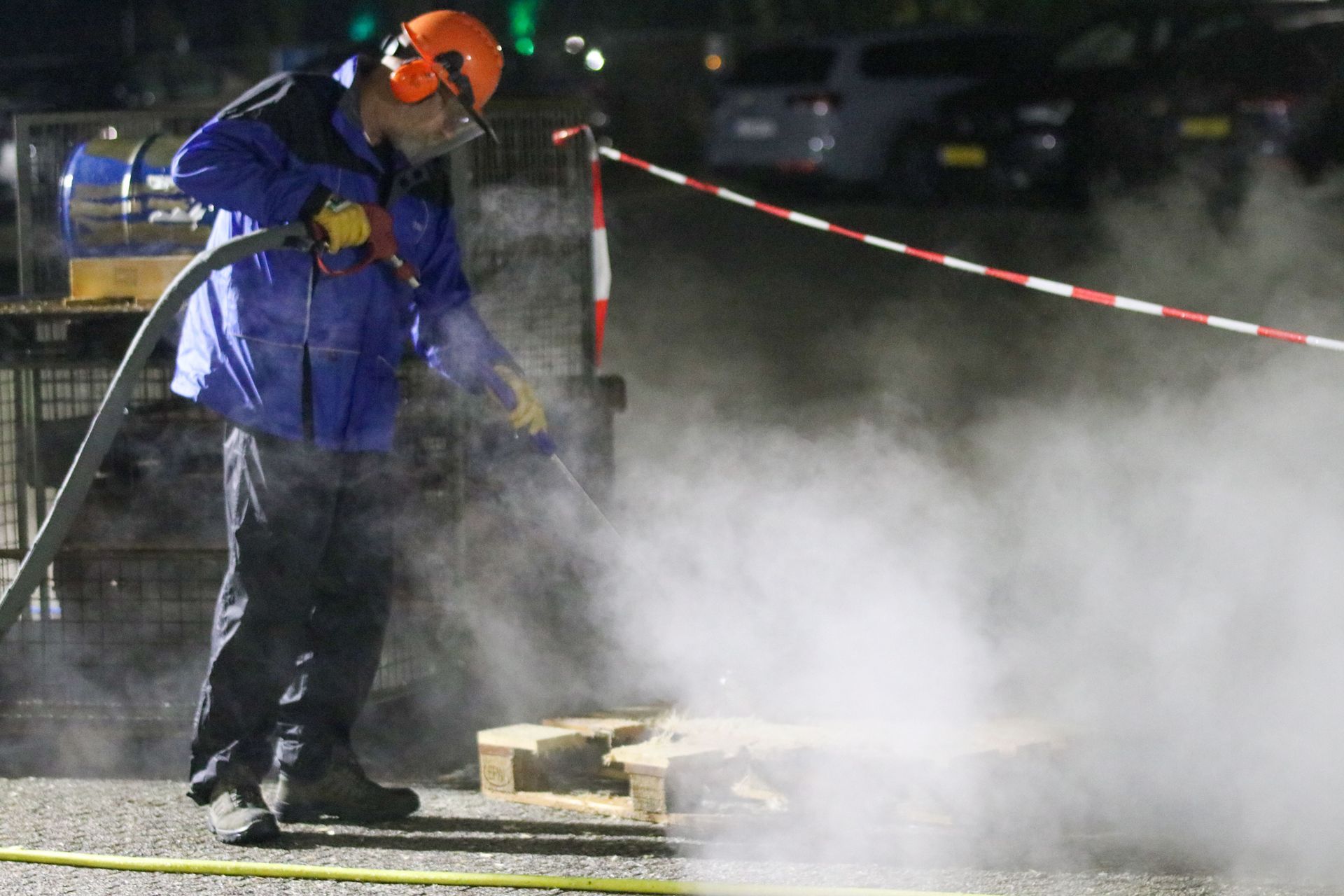
The process uses compressed air to propel dry ice pellets at high speed toward a surface. Upon impact, the pellets rapidly sublimate—transitioning from solid to gas—lifting contaminants away without leaving behind moisture or residue.
One of the key advantages of dry ice blasting is that it is non-toxic and chemical-free. This makes it a safer option for both operators and the surrounding environment. Because it does not rely on water, it also reduces the risk of corrosion, electrical damage, or mold growth associated with moisture-based cleaning methods.
Another benefit is its non-abrasive nature. Unlike traditional blasting methods, dry ice cleaning can be used on sensitive equipment and surfaces without causing damage. This makes it ideal for applications where maintaining the integrity of materials is critical.
Common uses include industrial equipment cleaning, fire and smoke damage restoration, mold remediation support, and surface preparation. Additionally, because there is no secondary waste, cleanup time is significantly reduced, allowing for faster return to operation.
For businesses seeking a more efficient and environmentally responsible cleaning solution, dry ice blasting provides a compelling alternative that combines performance with safety.